“Croc Hunting” in Beerwah

We visited the Australian Zoo, and it was incomparable. As a pre-veterinary student I love to see and learn about any and all animals so I thoroughly enjoyed this day.

As we walked into the zoo, the first thing that I noticed was the physical landscape of the zoo. It was fresh, green, and full of native trees and plants to make the animals feel right at home. We had from 10:00 in the morning to 3:00 to cover all of the exhibits in the zoo, and by 2:00 some of us were running to see as much as we could that we hadn’t seen. Needless to say, it was a massive zoo.

It was also a really special day because we got to see the Irwin family–Terri, Bindi, and Bob–at a crocodile show that they put on. The Irwins are well known throughout Australia and all over the world, in large part thanks to the success of the late Steve Irwin’s television show, “The Crocodile Hunter.” They are widely respected for the conservation gains that they have accomplished for animals.

img_9510
A handler backs up Terri Irwin (center) and Australia Zoo Director Wes Mannion (right) as they try to wrangle Mossman.

Nearly everyone named the crocodile show as one of their favorite attractions at the Zoo. To begin the show, Bindi Irwin, Steve Irwin’s daughter, put on a dancing and singing performance for the crowd with her pop group, the Jungle Girls. After the performance, two Sheela’s came out and introduced some of the fastest and most vibrant birds I’ve seen, most of which were native to Australia. Keepers had trained the birds to fly around the stadium in a perfect routine to show themselves off–this was an amazing sight. The Irwin’s came out next to introduce the crocodile that was about to arrive. I thought that it was so heart-warming to see them extending Steve Irwin’s legacy in such a positive manner.

The crocodile that they showed the audience–Mossman, an 1100 pound saltwater croc nearly thirteen feet long–was straight from the wild. His own life was threatened after he murdered a pet dog that got too close to the waterway where he lived. The whole crowd could sense that the Irwins were scared to get close to the croc, which made the show intense and unpredictable. The croc played mind games with them until it launched out of the man-made pool to get the meat that handlers were slapping against the ground near him. He was not fond of the handler, Wes, that went into Mossman’s territory, submerging himself temporarily in the clearwater pool. Throughout the show, he would move closer and closer to his target (always a person) to attack. Crocodiles are keen, intelligent creatures, and the Irwin family clearly values them deeply as a species. At the close of the show, they advised the audience to refrain from buying crocodile skinned objects.
Version 2
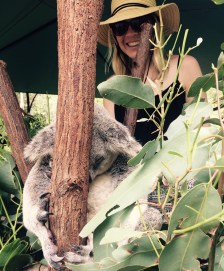
Courtney pets Frankie, a sleeping koala, under supervision of a keeper.

Walking around the zoo, I was amazed at the trust that the zookeepers had for us as visitors. We saw an exhibit featuring tortoises the size of small elephants; zookeepers stood inside the cage with families, letting them touch the tortoises and take pictures with them. I was completely shocked. In many US zoos, the keepers are rarely seen in the cage, and visitors are strictly prohibited in the cages for safety reasons. Along the way to different exhibits at the Australia Zoo, zookeepers held different animals to show us and educate us. There was one animal in particular that stood out to me, and it was called the shingleback lizard. It literally looked like its name–a back full of hardened shingles. The most interesting part of the lizard was its tail, which resembled a box. The end of the tail had a roundish shape, making it look like a head. The tail is not filled with any vital organs, so as a defense mechanism, a predator would most likely bite the tail thinking it was the head of the lizard. Luckily for the shingleback, as is true of most lizards, its tail will grow back!

Another stimulating exhibit was the one including the kangaroos. Visitors could enter this vast, grassy exhibit too. It was such a thrilling experience to pet and feed a native Australian animal. They were completely docile and not at all like the ones you see on Facebook videos or on TV. One thing that I didn’t realize was that there were different types of roos. There were two types of kangaroos, Reds and Eastern Greys, and also wallabies–both of which come from the marsupial family.
dsc07065
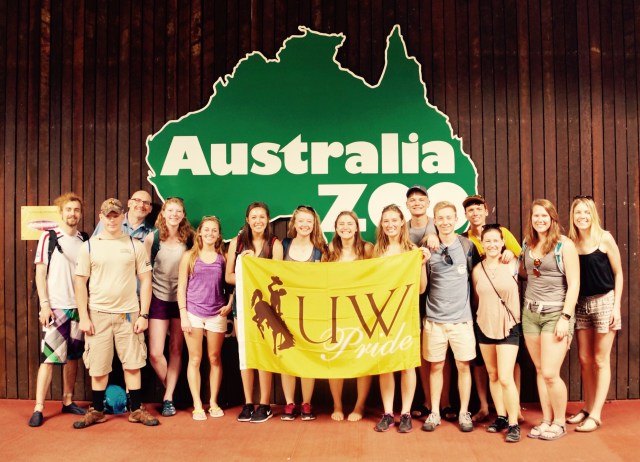
Our whole group at the entrance to the Australia Zoo, waving our UW flag.

It always amazes me how so many zoos work to protect any and every animal that they can, even if they are not from the local region or surrounding countries. At the Australia Zoo, there were exhibits including elephants, red pandas, tigers, giraffes, zebras, and rhinos. Do all of those animals get shipped to the Australia Zoo? These animals are most certainly not from Australia, and are instead from Africa or Asia. The red pandas were interesting: one of the signs said that they use their long bushy tails to stay balanced in trees. In the bird cages, a sign stated that: “The protein of which feathers are made is also found in lizard skin.” There was so much to learn, and so many interesting animals in the zoo to see, and not nearly enough time to see all of them.

On our way out of the zoo, we visited the animal hospital in which veterinarians and their assistants care for both the zoo animals and other imperiled or distressed wildlife (for instance, the hospital often treats koalas that have been burned in bush fires). The veterinarians on sight are fortunately in very close proximity to the zoo to care for the animals. When we got to the hospital, we could see the vets giving a koala anaesthesia in order to start surgery. There were a couple of other koalas there as well, getting rehab. One koala in particular, DJ, was hit by a car when trying to cross the road. She had only been away from her mother for two months at the time of the accident. She suffered internal bleeding, scratches and bruises, and fractured bones in her arm. Luckily, a kind police officer rescued her and she ended up at the Irwins’ Wildlife Hospital. Staff there are doing what they can to help, and soon she will have a happy return to the wild.

Zoos are controversial, but I had a good feeling that the Australia Zoo is an organization trying to do all it can to make animals feel at home and to ensure the preservation of many species.

-Taylor
Neighborhood Adventures

On day six in “The Land of Oz,” we were split into groups of two to three students to explore a specific neighborhood in the Brisbane area. Groups explored the residential communities, bicycled over all of the hills in Brisbane, spoke with café owners and locals, explored the nightlife, and even ran into various herds of shirtless Australian footballers! Whatever the adventure, each group experienced new culture, explored new territory, and grew within themselves.

I am disappointed to share that I am unable to blog about all of these wonderful neighborhoods in the detail they deserve, because I have only experienced one of these neighborhoods firsthand. The rest of them I was fortunate enough to learn about from the perspective of my peers during presentations the following day. My team, Team Fortitude Valley, was able to experience our neighborhood in two very different perspectives–one during the day and the other at night. To begin, I will dig deeper into the perspective my group had during the day.


img_9517-2
Bustling Fortitude Valley street.

Zoe, Chris, and I embarked from the Queensland University of Technology campus in the morning not fully realizing what we would experience during that day. Our walk to Fortitude Valley consisted of bustling streets of vehicles, tourists, business people, happy people, angry people, as well as one group of very sincere Aboriginals who were having an honorable dedication and remembrance of one of the many influential men who spoke up for the rights of Aboriginals. This man was executed long ago in the courtyard across from our hotel, and this ceremony was a traditional Aboriginal practice in which they respectfully remembered their leaders. This section of our walk was not technically part of our assignment but all three of us agreed that it was such a significant part in the history of Brisbane and the culture around the area that it enhanced our knowledge and understanding of the community as we began to explore.

A few blocks further down, we noticed that the bustling streets had calmed down to a very quiet neighborhood of businesses with few people walking around. The individuals we did see seemed less frantic than the individuals running around the city a few blocks earlier.

img_9540
Green spaces dot the Valley.

This change in foot traffic hinted to our group that we were entering a new community in the city of Brisbane. The beginning of Fortitude Valley showed a handful of trendy and modern high rises with other older looking architecture scattered in between. As we walked deeper into the heart of Fortitude Valley, the businesses became less modern and we started to see a larger Asian influence. In fact, there was a large area called Chinatown Mall.

At this time in the afternoon, we found half of this neighborhood to be open and the other half seemed dead, and you could almost sense a little bit of sadness in the air. That sadness disappeared quite quickly when the whole group joined us later to experience “The Valley” in the moonlight–or should I say the light of glamorous night clubs. In a manner of hours, this half dead community was brought to life. We saw people of all ages walking these streets. The smiling faces of local Australians energized our American group and we proceeded to have a wonderful evening.

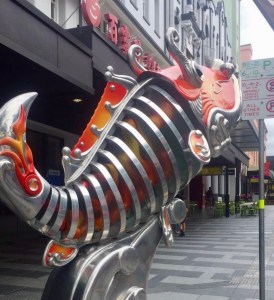
img_9541
Public art in Chinatown.

One important thing I learned during this adventure was humans have an incredible ability to completely change the landscape of a community. In this course, we have been studying the word landscape and what it truly means. Team Fortitude Valley experienced the vast ways a landscape can vary in a matter of hours, merely due to human influence on it and interaction with it. Jeff and Courtney chose some very informative articles for us to read that helped us define landscape. I enjoyed these articles and felt like I understood and could better grasp the broad definitions of landscape after reading them, however, I can say with confidence that the neighborhood adventure opened my eyes to what my brain was already grasping. I not only read but also experienced vast landscape changes in less than a day.

Not only did our group grow in our academic knowledge, but we also explored deeper into ourselves as contributing members of society. The wonderful thing about traveling is the variety of perspectives you run into. We have students with a variety of backgrounds, opinions, and perspectives about many subjects on this trip. Not one sees life through the same lens as another, which allows for personal growth as we engage with each other. We are able to hear a point of view, process our thinking in relation to the other person’s, and no matter what we conclude at the end, we have thought about what we stand for and why. At this time in our lives, as students, it is a very import process. Not only does this trip in general give us the opportunity to listen and understand others, but this activity specifically led us to discovery about ourselves. Whether we were paired with one or two other people, spending all day in a foreign place led us to connect with our partners. No one knew their way around the neighborhoods, we utilized many forms of transportation and maps to figure out how to get around. Basically, we were all in a vulnerable state which allowed us to empathize with the others and connect in a way we would not have been able to in a classroom in Laramie.

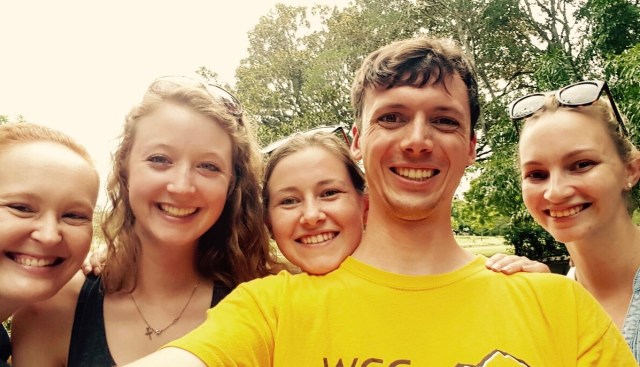
img_9518
Making new friends in our neighborhood. UW students pictured in the center, from left to right: Tevyn, Jaimie, and Alek.

During the activity, wandering in new places, some of us may have felt frustrated, confused, sad, happy, or even intrigued. But at the end of the whole experience I am able to speak for everyone along in saying that this adventure energized us for the next adventure to come.

I’ll end this post with a quote that I think is very fitting for our trip. It is by Samuel Smiles, a Scottish author and government reformer in the late 1800s:

“The experience gathered from books, though often valuable, is but the nature of learning; whereas the experience gained from actual life is one of the nature of wisdom.”

-Tori

Getting to know the Brisbane River

img_5703
The Manor Hotel

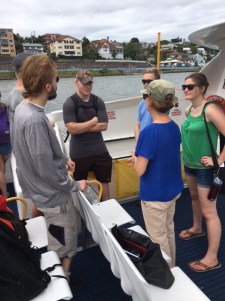
January 4th. After a delightful early breakfast held at the Manor Hotel, our students ventured through the rising city atmosphere of ambitious laborers heading off to their mid-week employment. The city became alive as we traveled through the network of city streets residing beside the ever flowing river of Brisbane. The Queensland University of Technology (QUT) brought a familiar touch of summertime at the University of Wyoming; it was beautiful, the perfect temperature and plenty of pleasant individuals. We began class with an ambitious discussion of our three assigned readings, equating our past experiences at the Museum of Brisbane’s 100% Brisbane exhibit as well as the constant overlay of an ever so unique landscape and environment. The true beauty of our first experiences in Brisbane may still be difficult to describe. Our assigned readings amplified the focal point of our interpretations of land, culture, and personal perspective as each reading held a unique color amplifying our palette of landscape understanding. We found comfort in deconstructing the three types of landscapes described by the literary works of J.B. Jackson as well as overhauling the questions we might have found while interpreting our readings. The classroom at QUT underlined the concept of modern academic architecture, as the layout remained shiny, new, comfortable, and futuristic. After our discussion, our class enjoyed a brief break to refuel with water and prepare for a beautiful lecture with University of Queensland doctoral candidate and Brisbane river flood specialist Margaret Cook.

img_5617
Margaret’s expertise was invaluable to our learning.

We experienced a well-rehearsed presentation that touched upon our ideologies brought up within the assigned readings, as well as the past, present, and future state of the river. We learned of the implementations of two supplemental dams that bring life to the city of Brisbane through the application of river water into city usage. We observed the geographical reach of past flood areas within the city of Brisbane and minor communities around the city that have been drastically affected by the occurrence of a constant downpour of water and improper flood preparations. We observed the categorical data that deconstructed the profound short term and long term effects within the flood areas of Brisbane. We learned of many different social and political values that need to improve as well as past improvements that have shaped the landscape for the better. Margaret advanced our greater understanding of the internal and external effects of the landscape, the policy, and the governing forces within the city of Brisbane and the surrounding state of Queensland. After a comprehensive presentation embodying the core of our landscape study of the geography and city, we took a brief lunch break at QUT. Some students chose a quaint burger shop with layers of flavor to savor, while other students ate at the local student union with sandwiches such as an eggs benedict with a cultural coffee or British style tea.  After a wonderful lunch experience, we met back up at Old Government House on the QUT campus, with a brief view of unique architectural aspects. We traveled through the streets of Brisbane toward the CityCat water taxi speed boat transportation throughout the river with Margaret’s instruction and guidance. We observed the entirety of the city from the upstream end of the water taxi route to its downstream terminus.

img_5593
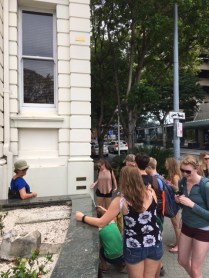
Observing historic flood levels along Mary Street, Downtown Brisbane. (Look up at window height for the 1893 high water mark!)

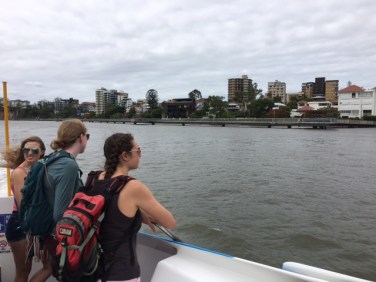
While on our enduring journey along the river, we bombarded Margaret with an assortment of questions in response to our teaching of the social, political, communal, geographical, and economic welfare of the city. Cook’s response amplified our perspective and understanding of the vast improvements of the landscape within Brisbane. We viewed the highest points of the Brisbane floods from 1893, 1974, and 2011, and their effect upon the landscape. We viewed the original houses banked along the coastline of the river, identifying the original inhabitants of European society within the state of Queensland. Current inhabitants within Brisbane are required to pay a mandatory flood insurance to ensure coverage for homes located closest to the river. We ended our tour of the beautiful city river of Brisbane with a nice snack at an outdoor Australian pub right off the beaten trail of Brisbane’s waterways.We had a wonderful concluding with our guide Margaret Cook as well as enjoyable conversations with local Australians before traveling over to Toowong train station and heading back to the Central Station train stop and our hotel.

img_5597
Riding the CityCat.

At The Manor, the male students prepared a wonderful dinner with a fully stocked kitchen from our trip to Woolworth’s grocery. We had a sautéed mixture of mushrooms, yellow peppers, spinach, garlic, and lemon olive oil with avocado and marinated salmon fresh from the seas of the Atlantic and tomato bisque garlic bread. While the female students cooked similar dishes of salmon using fresh garlic, lemon and salmon for a delightful meal. We rounded the night off with a peaceful evening of sleep and recovery preparing for a venturous day of exquisite adventure ahead! Each student received a wonderful night’s sleep of ten hours or more this past evening on Wednesday the 04th of January 2017. We have started off the New Year within a dreamy yet idealistic academic vacation.

– Sven

Welcome to Meanjin

“We need to ensure that our future stretches as far in front of us as our past does behind us.”
-Teila Watson, Birri-Gubba/Wiri performance artist

The first full day in Queensland started early for most of us. The sun pushed its way into our bedrooms before five and it, along with our skewed body clocks, compelled us to wake up hours before our hotel breakfast was ready.

Brisbane is a new city to all but two of us in the group. To orient ourselves to its history, we joined a morning tour at City Hall. Our guide Zoe was lovely, and patient with our large group wandering agog through the grand marble and wood building which opened its doors in 1930.

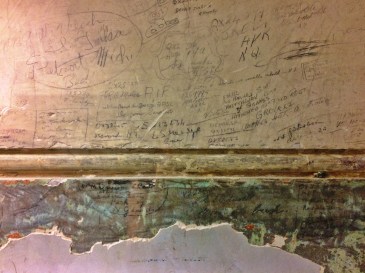
The place was full of stories: during a recent renovation of the basement, workers discovered a wall of graffiti. Remarkable graffiti. Soldiers in the Second World War had etched their names and their serial numbers into what was at the time a bathroom wall. All the signatures were Australian, save one—there in the bottom right corner was the big bubbly script of an American soldier from Detroit named Bud. After the discovery, a contemporary historian ran each of the numbers, including Bud’s. She discovered that every last soldier returned from the war alive. Auspicious wall.

fullsizerender
Recently discovered graffiti in the basement of City Hall.

For tens of thousands of years before the British turned it to a penal colony for Syndey’s most malevolent convicts and after that a home to free settlers, Meanjin was the land of the Yuggera and Turrbal people. First peoples warned the Brits that the banks of Maiwah were prone to flooding, pointing to debris caught in trees to demonstrate the height of past floods, but the Brits built in the river basins and flood plains anyway.

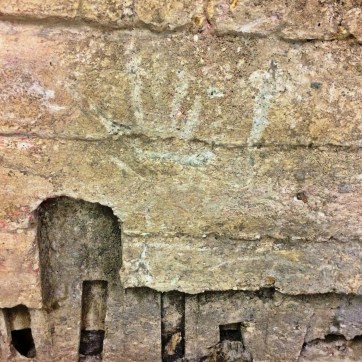
Years later, with the penal colony gone and the new civilians of early modern Brisbane requiring a city hall, construction of the new civic space began on the site of a drained swamp. One hundred and eighty nine very deep piers were poured to bolster the structure—which may or may not be haunted now by a man who died by drowning when his fellow builders left for lunch, with him still down in the water—and then reinforced eighty years later when engineers realized that the eroding cement was weakening because it had been made from a saltwater mix during a time of drought. Clean water was too precious to be used in construction then, so laborers turned instead to the salty waterway coursing through the city. On an exposed pier in the basement, the handprint of a worker is pressed into the pockmarked cement.

fullsizerender-1
The handprint of a Brisbane City Hall construction worker, from sometime between 1920 and 1930.

During the tour, we visited the Shingle Inn, a historic teahouse once popular with American soldiers who convinced the proprietors to add lemon meringue pies and waffles to its menu. Our docent explained that the original Inn was demolished in the middle of the night during the reign of Premier Johannes Bjelke-Petersen, a popular but wildly corrupt politician whose political career ended in 1987 after nearly two decades. “Joh” had a reputation for ordering the destruction of historic structures under cover of night and in the name of progress, preferring skyscrapers to the timber, lace, and breezy verandahs of the vernacular Queenslander architecture. So the bits and pieces of the Inn were tucked into storage.

But this story turns out to be apocryphal. The original Inn was actually shuttered in 2002 because of redevelopment, and revived by new owners. (We later confirmed that Joh’s dodgy night demos were a common practice affecting other historic buildings in Brisbane, if not the Shingle.) At the current manifestation of the Inn, high tea is still served each day, in a lavish space decorated with Tudor beams and leadlight windows. As I peaked into the nearly empty dining room, where a woman in a period costume of a black bombazine dress, starched white apron, and peaked cloth hat was waiting behind a counter for guests, I thought about our human instinct to protect buildings, sites, and landscapes that remind us of collective histories and identities and pasts to which we are often only very loosely tied. How do we select what is worth putting in storage for re-assembly later? And who gets to choose? Who has to tear down the timberwork, and who is responsible for joining it back together? What gets demolished in the night?

The Museum of Brisbane—a hip space covered in graphic wallpaper and full of Scandinavian modern furniture—moved into the third floor of City Hall a few years ago. We visited after our tour ended. The latest exhibition, 100% Brisbane, was mounted this summer. It is fresh, surprising, and revealing. At its heart was a project called “Brisbane DNA,” initiated by Berlin theatre group Rimini Protokoll. It is essentially a grand multimedia self-portrait of the city, an audiovisual daisy chain of one hundred Brisbanites’ stories. Each describes his or her relationship to the city, shares opinions on political and ethical and environmental hot topics, and raises one question to ask the other ninety-nine participants (examples: I want to know how many of you think you will own a house with a backyard one day? How many of you believe in climate change? How many of you think people of color are treated differently than whites in Australia?). Their answers expose the attitudes and values that are the topography of this cultural landscape.

After we left the museum, while I prepared for a discussion I would lead the next day about what we mean when we say “landscape” or “sustainability” (two concepts central to this course), in my mind I kept returning to a relatively small subsection of the exhibition, titled “Country.” It was a video, projected onto a wall as you entered, playing on loop. I almost missed it, because there was already a crowd huddled up watching it and the piece was clearly many minutes in when I showed up. But I spotted someone sitting cross-legged on the floor, watching rapt, and decided I should too. “The land will respect people that respect the land,” said a white-bearded Ngugi elder in a crimson shirt. As he spoke, behind him images of clear water yielded to sandbanks, to skies at dusk, and to bunya pines. “You will feel embraced by the spirit of the land.” I remembered our walk through the city’s Botanic Gardens the day before. Had I brought respect for the land? Brought anything at all? Had I felt an embrace there? Another man appeared on the screen, a younger member of the Yuggera, Turrbal, and Kombumerri nations named Shannon Ruska. “Underneath those buildings,” he said as images of a pristine Brisbane flickered in and out behind him, “lies our cultural laws.” I thought about the basement at City Hall—about how much history had been revealed there, about how little history had been revealed there. Next a woman, Teila Watson, a Birri-Gubba and Wiri woman, speaking in verse: “Just re-associate my name with your heartbeat/the last hundred years have been a dark feat.” Forceful, taut, and then the poetry dissolving back into plain speech: “We need to see what every one of our ancestors saw when they looked at creation. We need to ensure that no manmade end will find us.” On June 3, 1992, the High Court of Australia ruled that the lands of Australia were not terra nullius at the time of European settlement, that the land was a story, that the land was a collection of stories well before James Cook first sailed into Botany Bay in 1770.

I watched the video three more times before I got up and entered the exhibit.

-Courtney

We’re not in Wyoming anymore

nz-sunsrise
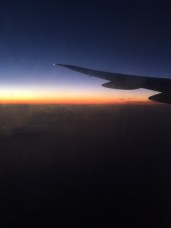
Sunrise, Pacific Ocean, off the eastern coast of New Zealand

Happy 2017 from The Land Down Under! Our Queensland’s Landscapes adventure is underway. Following our various connecting flights to Los Angeles, we departed for New Zealand late in the evening of December 31st, with the New Year quietly rung in somewhere over the Pacific Ocean a few hours later. After a short, three-hour layover in the Auckland airport (duty free chocolate and trendy kiwi wares), it was on to Australia. Thanks to the International Date Line, we lost New Year’s Day itself, making our arrival in Brisbane to be mid-morning on January 2nd. By early afternoon, we were settled in downtown Brisbane, or the CBD – for Central Business District – as it’s known. The rest of our day we spent orienting ourselves a bit to the layout of our immediate neighborhood and getting acclimated to the heat and humidity (temps in the high 70s, humidity even higher).

Brisbane will be our base for the next five days.With almost 2.5 million people in the metropolitan area, it’s Australia’s 3rd largest city after Sydney and Melbourne. As such, it’s a major financial and cultural hub, boasts numerous universities, and is the state capital of Queensland. Here, we’ll be learning about some urban and cultural geography concepts and themes, and as well as exploring the impact of the Brisbane River on the surrounding landscape.

brisbane-river
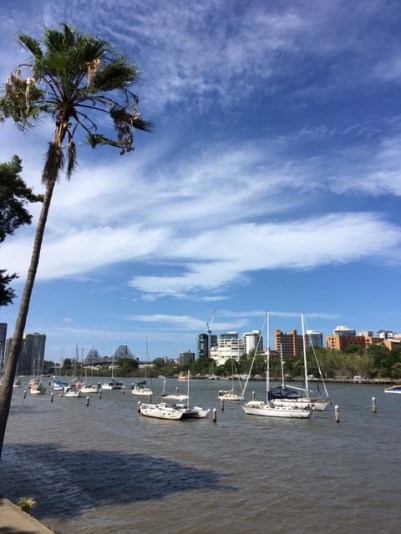
Brisbane River and boat moorings along the City Botanic Gardens, with Story Bridge in background.

We’re excited about this great opportunity to experience different people, customs, culture, and environment. There’s no better way to learn about a new place than by immersing yourself in it. That’s what we intend to do with southeast Queensland over the next 20 days. It’s going to be a great journey!

G’day for today!

~ Jeff

Welcome!

Welcome to blog site for the Spring 2017 Exploring Queensland’s Human and Physical Landscapes field course offered by the Haub School of Environment & Natural Resources at the University of Wyoming.

The purpose of the blog is to help class participants document their experiences and share them with peers, family, and friends. – We hope to post daily between our departure on December 31, 2016 and our return on January 21, 2017, so please check back for our latest entries.

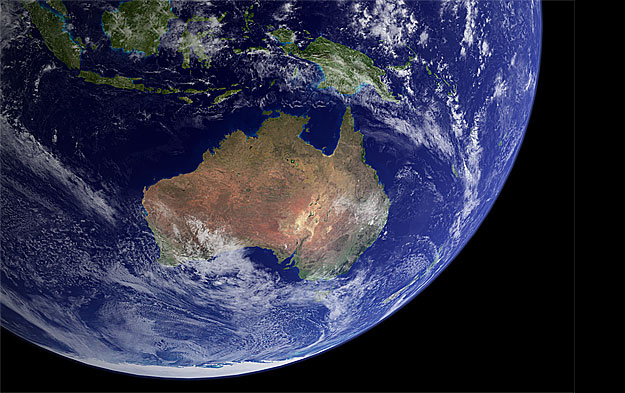
australia-from-space